

Not all flours are created equal. Learn which type works best for bread, pasta, or pastries—and why it matters more than you’d think.
Flour is the heart of the kitchen. From bread and pasta to sweets and sauces, this humble powder plays a vital role in dishes across cultures. But not all flours are the same. Understanding the different types and their best uses can help you achieve perfect results every time. In this guide, you’ll learn how to choose the right flour for every purpose—whether you’re baking a rustic loaf, whipping up cake batter, or thickening a silky sauce.
🌾 Flour Categories at a Glance
Flour can be grouped into three major categories:
- Wheat Flours
- All-purpose, bread flour, cake flour, whole wheat, spelt
- Other Cereal Flours
- Rye, barley, oat, corn, rice
- Gluten-Free & Alternative Flours
- Almond, coconut, chickpea, buckwheat
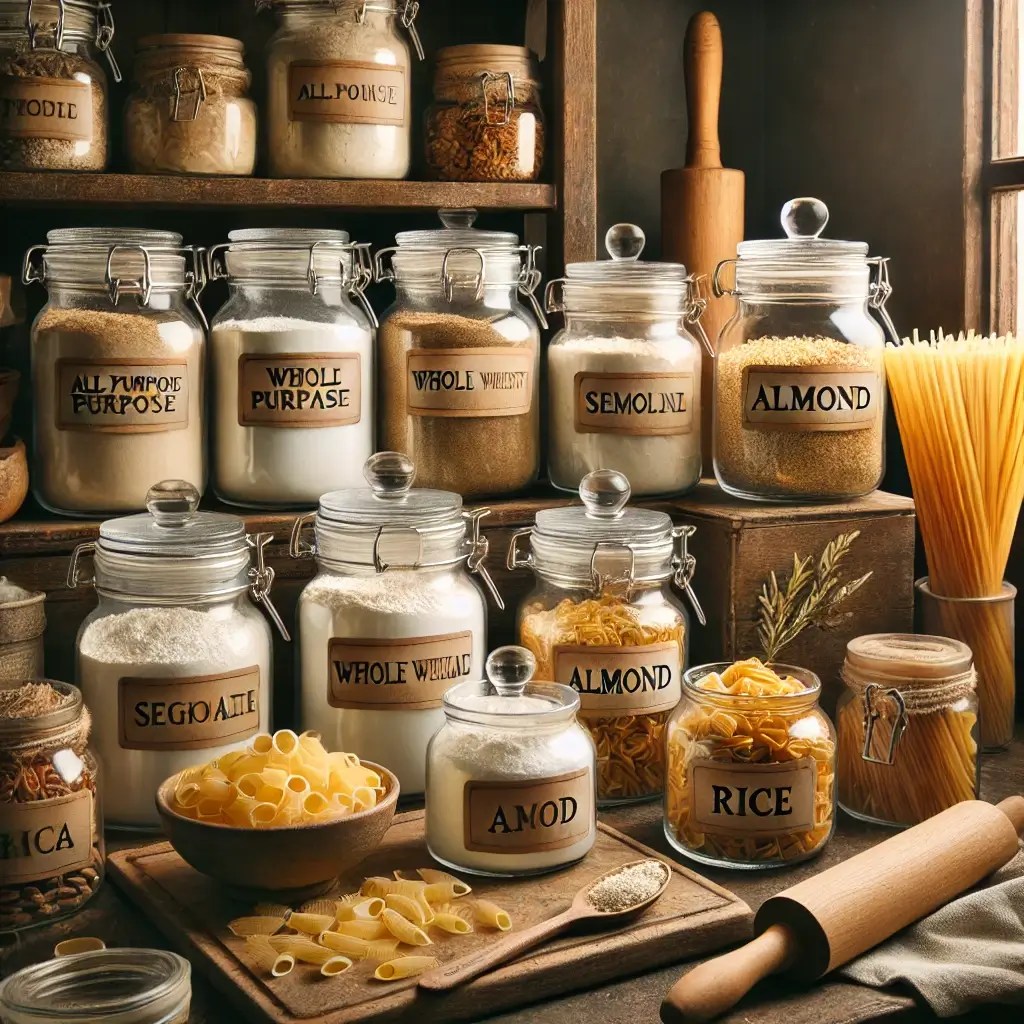
📝 Note from my kitchen: I mostly use wheat flour and cornmeal, but I’ve only occasionally worked with rice flour. So this article leans more on practical insights from wheat-based recipes.
🍞 Choosing Flour for Bread Making
When it comes to bread, your choice of flour makes or breaks the loaf. Here’s what matters:
- High Protein Content (10–13%): Forms gluten for elasticity and rise.
- Refinement Level: Less refined flours like whole wheat add fiber and depth.
- Color: Slightly darker flour often means it’s less processed and richer in nutrients.
- Strength (W Value): A higher W value (over 300) is great for long fermentation.
- Water Absorption: Good flour holds enough moisture for a soft crumb.
- Ash Content: Reflects how much of the grain’s outer layer is present.
- Falling Number: Affects fermentation quality and dough behavior.
👉 Tip: For whole grain or artisan-style loaves, choose strong flour and allow long rest times. Learn more about bread-making in my Foolproof Homemade Bread Recipe.
🍰 Best Flour for Pastries and Desserts
Light, fluffy desserts need soft flours:
- Low Protein (7–9%): Helps create a tender, airy texture.
- “00” Flour (Europe): Ultra-fine and ideal for cakes, tarts, and cookies.
- Cake Flour (US/Canada): A soft, low-gluten flour that mimics “00” texture.
🧁 Tip: Always sift pastry flour—it removes lumps and improves mixing.
🍝 Which Flour to Use for Pasta
Texture matters in pasta:
- Durum Wheat (Semolina): High protein, firm bite, holds shape in boiling water.
- “00” Flour: Smooth, elastic, and ideal for fresh egg pasta.
📌 Keep in mind: Flour labels vary by country, so always check protein content and fineness.
🍯 Using Flour to Thicken Sauces
For smooth, lump-free sauces:
- Wheat Flour: Mix with cold liquid first (slurry), then whisk into the sauce.
- Cornstarch: Adds gloss and neutral flavor—ideal for quick sauces.
- Rice Flour or Egg Yolks: Great alternatives depending on your dish.
📌 Pro Tip: Add thickeners gradually and stir continuously to avoid clumps.
💡Final Toughts
Different recipes call for different flour characteristics.
For instance, if you want to make bread, opt for whole wheat or strong flour with at least 10–12% protein, added gradually to achieve the perfect dough hydration. Remember: the dough needs proper kneading (about 10 minutes) to develop gluten, and always add salt last to avoid deactivating the yeast. Pre-activating your yeast with a bit of water and flour for 15 minutes ensures a robust start.
For pastries, choose low-protein flours, and for pasta, consider durum wheat or “00” flour. When thickening sauces, select the appropriate agent to get the perfect texture without altering flavor.
Quick Recap
- Bread Making: Use high-protein, preferably whole wheat flour; add water gradually; knead well; let the dough rise; add salt last; and pre-activate yeast.
- Pastry: Choose low-protein flour for a tender, delicate texture.
- General: Always sift your flour to remove lumps and ensure even mixing.
🍞 Additional Practical Tips
Freshness Counts: Store flour in a cool, dry place and use within 6–8 months 🏡
Sifting Makes a Difference: Aerates flour and ensures consistency 🌬️
Whole Wheat = More Nutrients: But also a denser texture 🌾
📚 Want to Learn More?
- For a full tutorial on artisan-style bread, read my Foolproof Homemade Bread recipe.
- Curious about kitchen efficiency? Start Cooking From Scratch and build habits that save time and boost health.
🌾 Bake & Learn with Lela #SimplifyWithLela🌾
💌 If you enjoyed this post and want more seasonal tips, cozy recipes, and gentle reminders to slow down, you’ll love my monthly newsletter. No spam, just spinach.
 MakeItSimpl3