
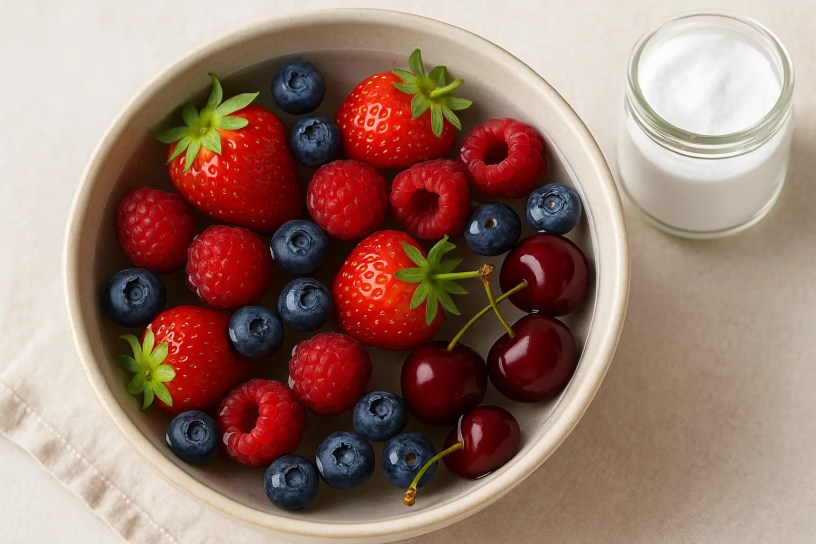
Learn how to safely wash fruits and vegetables using natural methods—what works, what’s hype, and how to clean smarter this summer.
You rinse your apple and call it a day? Cute. But what if I told you that strawberry wasn’t just wearing seeds… it was wearing a chemical coat too?
Let’s find out what’s myth, what’s marketing, and what you actually need to do to clean your summer produce — without scrubbing your soul in the process.
🥬 Why You Should Care About Clean Produce
Summer is the season of abundance. Ripe tomatoes, juicy peaches, fresh greens. And while your garden may be chemical-free, the supermarket haul? Not so much. Even organic produce isn’t safe from grime, bugs, or the occasional bird poop surprise.
Plus, kids. Little hands grabbing cherries by the dozen. Better make sure those fruits are cleaner than your conscience after ignoring laundry for a week.
💧 The 4 Most Common Washing Methods (And How They Rank)
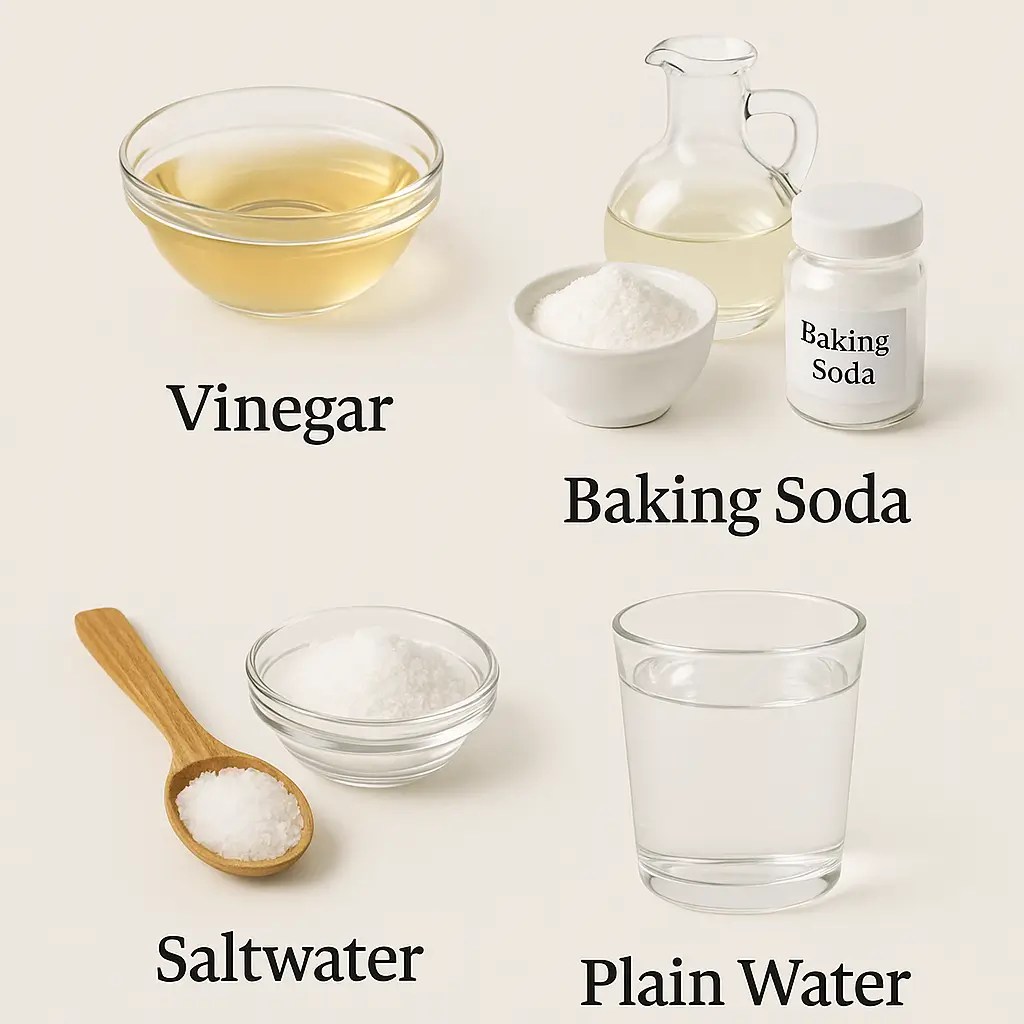
1. Vinegar soak
- Pros: Cuts some bacteria. Easy to use.
- Cons: Doesn’t do much for pesticides. Leaves a weird taste on berries.
- Verdict: Use for leafy greens or apples, rinse well.
2. Baking soda bath
- Pros: Best at removing pesticide residues (scientifically proven!).
- Cons: Needs soaking time. Not magic, just science.
- Verdict: Use for almost everything except fragile berries.
3. Saltwater rinse
- Pros: Helps dislodge dirt and tiny bugs.
- Cons: Not great for chemicals. Might make leafy greens limp.
- Verdict: Use for herbs or greens fresh from the garden.
4. Plain water
- Pros: Always available. Removes visible dirt.
- Cons: Doesn’t remove much else.
- Verdict: Better than nothing. But just barely.
🧪 The Surprising Truth About Pesticides and Peeling
If you’re already on a deep cleaning streak (kitchen, bathroom, produce — why not?), this fits right in.
Here’s the deal: some pesticides do penetrate the peel. But many sit on the surface. Washing helps, especially with baking soda. Peeling works even better for fruits like apples, cucumbers, and peaches—but you lose fiber and nutrients too.
So if you can wash instead of peel, do that. Your gut will thank you.
🧼 By Type: How to Wash Different Produce Correctly
🍓 Watery Fruits (Strawberries, Raspberries, Cherries, Blueberries)
How to wash:
- Sort and discard spoiled fruits.
- Rinse gently in a strainer with cold water (2–3 minutes, low pressure).
- Optional: soak for 2–3 minutes in a 1% baking soda solution, then rinse.
- Drain well and pat dry with paper towels.
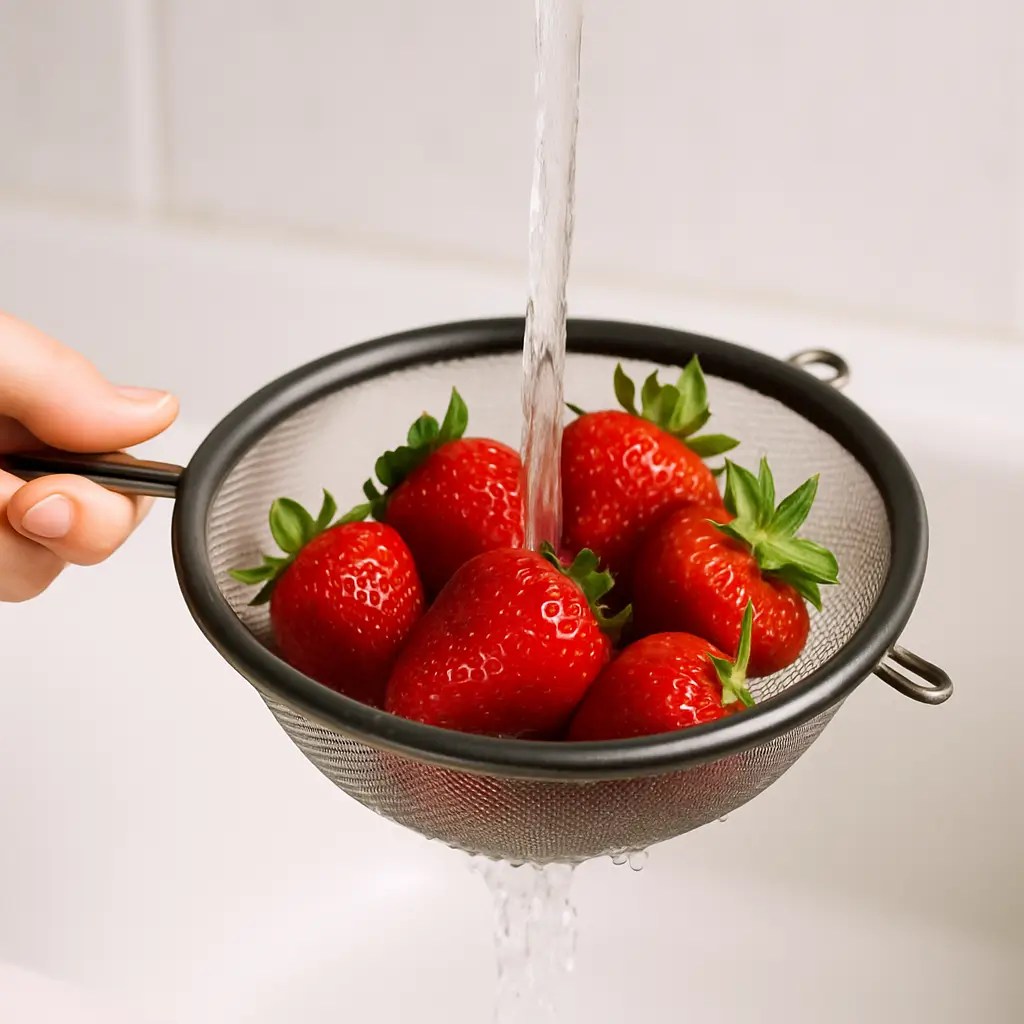
Storage: Only wash right before eating. Keep in the fridge in a ventilated container lined with absorbent paper.
🍏 Firm-Skinned Fruits (Apples, Pears, Quinces)
Tough skin, can handle more friction.
How to wash:
- Use a soft brush and cold running water.
- For pesticide removal: soak 12–15 min in 1% baking soda solution, then rinse.
- Dry thoroughly with a towel or air dry.
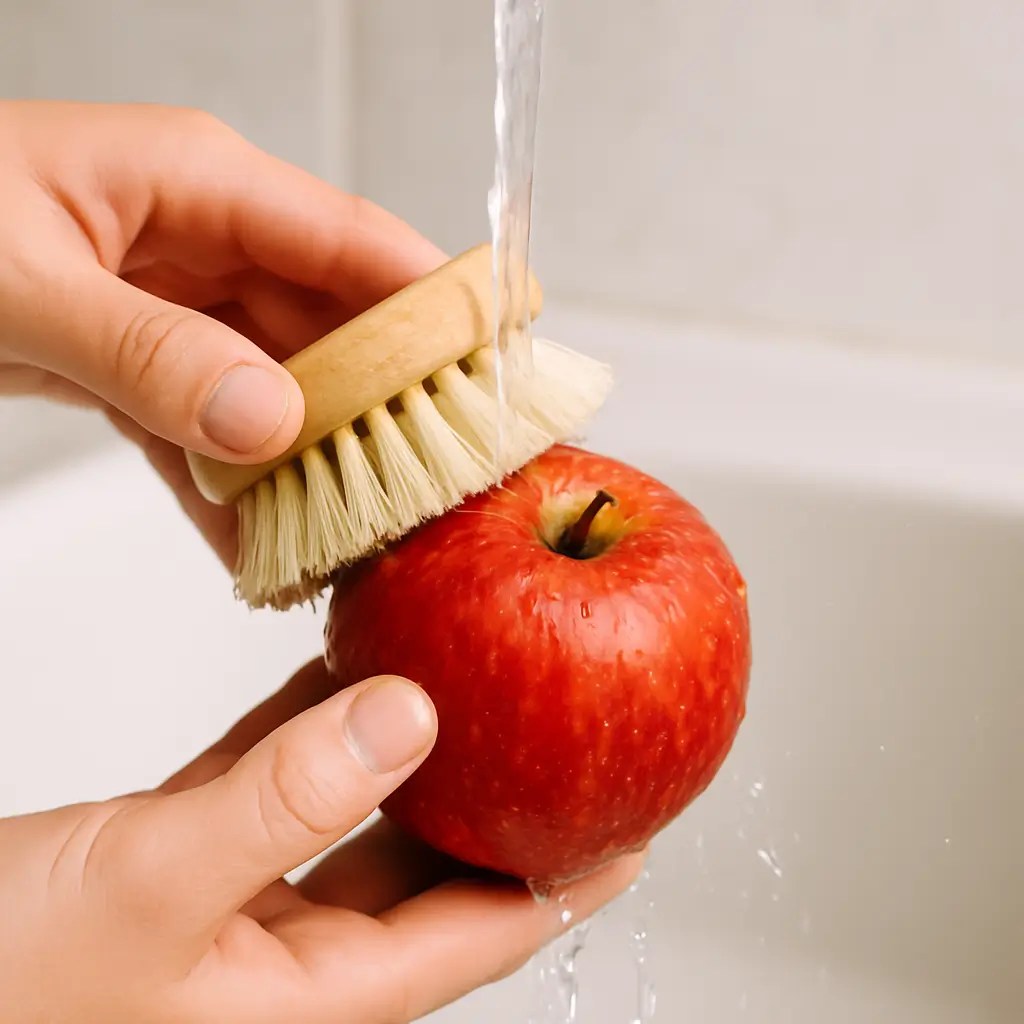
Storage: Can be washed before refrigerating. Store in the crisper drawer.
🍋 Citrus Fruits (Oranges, Lemons, Mandarins)
Waxy, porous peel, often treated with coatings.
How to wash:
- Brush + cold water rinse (1–2 min).
- Optional: soak for 12 min in 1% baking soda solution or 5–10 min in diluted vinegar.
Storage: Keep unwashed in a cool, well-ventilated area. Wash only before eating.
🥬 Leafy Greens (Salad, Spinach, Parsley)
Delicate and often full of hidden grit.
How to wash:
- Soak in vinegar or saltwater for 5–10 minutes.
- Rinse thoroughly under cool water.
- Dry gently using a salad spinner or by patting with paper towels.
Storage: Wash only before eating. Keep unwashed greens in the fridge in a sealed container or produce bag lined with a dry paper towel.
🐛 Getting Rid of Worms in Cherries
- Saltwater bath: 1 tablespoon of salt per 240 ml warm water (30–35°C).
- Soak 10–20 minutes, stir gently — larvae float.
- Rinse with cold water and follow up with normal washing.
This step matters even more if you’re planning to preserve fruits or herbs. Proper washing is the quiet foundation of safe, long-lasting preserves — especially when immune-supportive foods are involved.
🧪 Surface vs Systemic Pesticides
Contact pesticides stay on the peel and can be removed by washing or peeling.
Systemic pesticides (like imidacloprid, thiabendazole) enter the pulp — washing won’t help.
Only solutions:
- Peeling the fruit.
- Cooking (partial breakdown).
- Buying organic when possible.
⚙️ High-Tech Washing Methods: Do They Work?
- Ozonated water: lab tests show 75% pesticide removal at 2–4 ppm, but home devices are weaker.
- Electrolyzed water (EO): may help, depends on active chlorine levels.
- Ionized water: lacks reliable studies.
Conclusion: professional-grade devices can help; cheap home tools, not so much.
🧴 Store-Bought ‘Natural Cleaners’: Are They Worth It?
If you’re already on a deep cleaning streak — kitchen, bathroom, produce — this fits right in. Clean living isn’t about fear or perfection; it’s about clarity and choosing what actually matters.
Short answer: Meh. Long answer: Most are overpriced vinegar or citric acid with a fancy label. Unless the ingredient list has actual soap (like castile), you’re paying for marketing. Better to DIY your own.
🍒 How I Clean Mine (Without Going Crazy)
Honestly? I don’t soak every cherry in a spa treatment. But for leafy greens, apples, and anything my kid grabs without warning? Baking soda is my ride or die. And yes, I still wipe cucumbers on my shirt occasionally. Nobody’s perfect.
If it looks suspicious, it gets the full spa. If it’s from my garden? I just rinse and smile.
🌿Keep It Clean, Keep It Real
If you’re wondering how I deal with greens like spinach (without drama), just know that even I skip the spa treatment sometimes — when I know where it came from. No fancy washing tips there, just a good rinse and hope for the best.
Don’t let fear ruin your salad. Clean eating was never meant to become another source of anxiety — just a small habit that supports everyday health.
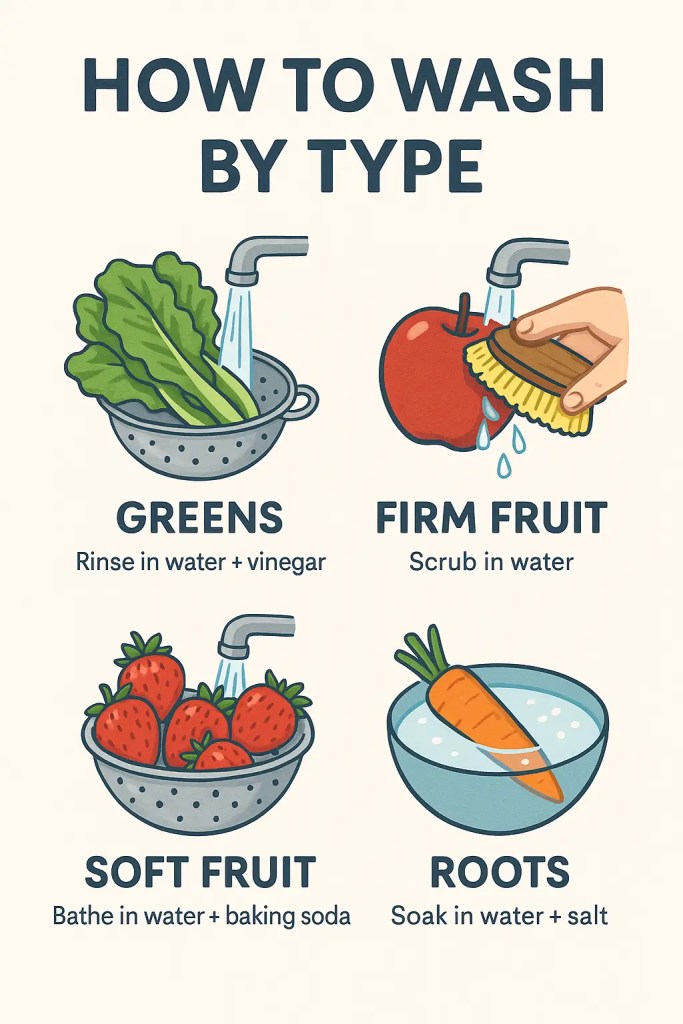
Want a quick visual reference for your kitchen?
Download the Mini Produce Cleaning Kit — a 3-page printable with step-by-step washing tips and a bonus cherry worm rescue guide.
👉 Get it here and keep it close all summer long.

🥕 Clean naturally. Live lightly. Eat safely. #SimplifyWithLela 🥕
 MakeItSimpl3