
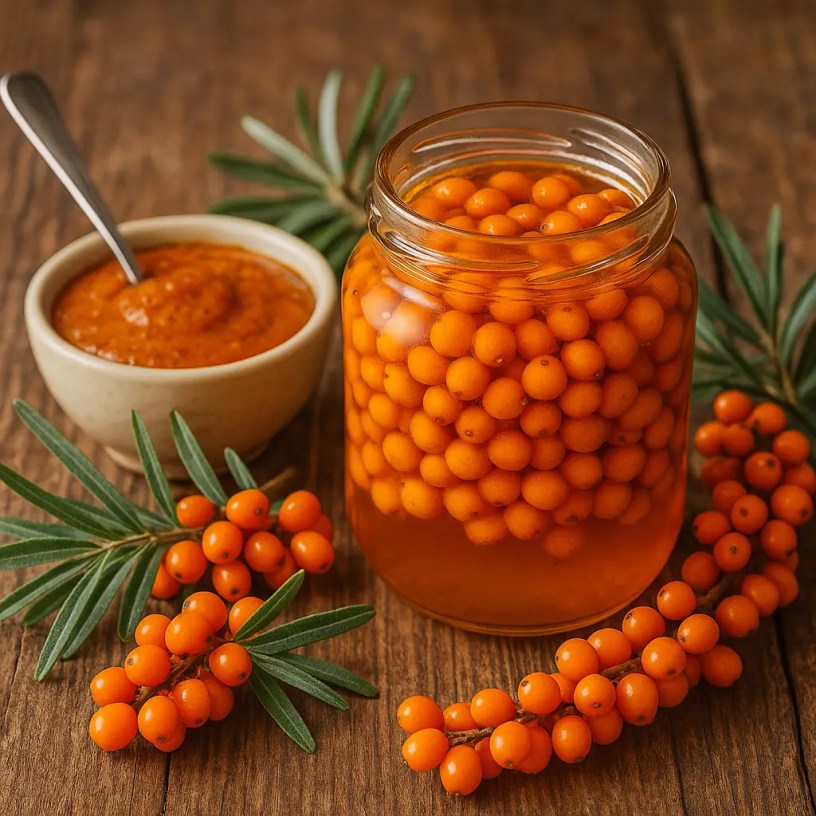
In this guide, you’ll learn how to prepare sea buckthorn with honey in two different ways — the smooth blended paste and the classic whole-berry maceration. I’ll walk you through each method, real quantities, storage tips, how long they last, and even what science says about sea buckthorn. Simple, natural, and made for real families (yes, even picky kids).
As a nurse and a mom, I take immunity seriously — especially when there’s a preschool kid bringing home every possible microbe from the outside world. Sea buckthorn with honey is my go-to remedy: natural, powerful, and (surprisingly) tasty enough even for kids. I’ve tested two homemade versions — one smooth, one with whole berries — to see which one truly works best for busy parents who want health without drama. 💛
What Makes Sea Buckthorn So Powerful 💪
Sea buckthorn (Hippophae rhamnoides) is a small, resilient shrub that thrives in harsh climates — from coastal dunes to mountain slopes. It grows naturally across Europe and Asia, especially in Romania, where it ripens between August and October. The bright orange berries are loaded with nutrients that make even citrus fruits blush.
Nutritional Highlights:
- 🍊 Vitamin C: up to 700–1500 mg per 100 g — that’s up to 20× more than an orange!
• Adults need around 75–90 mg/day, children about 45–60 mg/day, so a single spoonful easily covers daily needs. - 🌿 Carotenoids: antioxidants that support vision and glowing skin.
- ✨ Vitamin E: helps cell regeneration and works as an anti-aging ally.
- 💧 Omega 3, 6, 7, and 9 fatty acids: rare in plants, they help reduce inflammation and protect mucous membranes — a must for winter immunity.
- 💪 Polyphenols and flavonoids: your natural shield against oxidative stress.
Sea buckthorn supports immunity, skin repair, heart health, and even digestion — it’s one of those rare plants that offers both protection and healing at the same time.
Wild vs. Cultivated:
- 🌾 Wild berries are smaller, tangier, and often chemical-free but harder to pick.
- 🍯 Cultivated berries are larger, sweeter, sometimes lightly treated, so always look for organic or untreated sources.

When harvesting or buying, look for deep orange, firm berries. If you freeze them right after picking, they’ll keep nutrients for months. And if you’re lucky enough to find them wild, wear gloves — the branches bite back!
In my kitchen, I ended up using both. Because sea buckthorn ripens around September, I needed a boost earlier — in August, right before kindergarten season (a.k.a. the microbe festival ). So I used frozen cultivated berries for my first batch. Later, when the wild ones appeared — usually sold by elderly women along the roads — I bought those for my winter jars. They’re sharper in flavor, deeper in color, and maybe a little more magical.
✨ The wild berries spoil quickly and oxidize within a day, so they must be processed immediately — the sooner you add the honey, the more goodness you lock in.
Understanding the Berry Itself 🍊
Before diving into preservation methods, it helps to know what’s inside these tiny orange powerhouses.
Skin: rich in flavonoids and carotenoids — those bright pigments that make them glow.
Pulp: juicy and full of vitamin C, organic acids, minerals, and a bit of pectin.
Seeds: tiny capsules of omega 3, 6, 7, 9 and vitamin E.
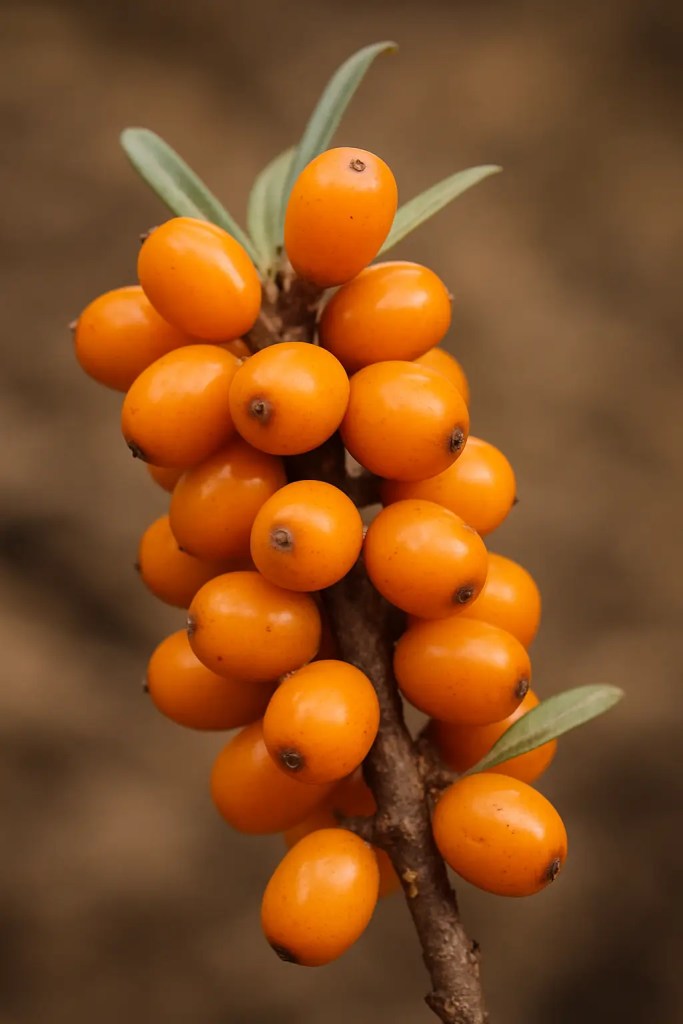
These natural “chambers” protect nutrients from oxidation — which is why how you crush or preserve them matters so much.
Now that you know what’s inside each golden berry, let’s see how different methods affect both taste and nutrition.
Ingredients & Quantities 🍯
Here are the exact amounts I used for both versions — simple, practical, and easy to scale depending on your jars:
For Whole Berries (Maceration Method):
- 500 g fresh or wild sea buckthorn
- 800 g raw honey
This ratio keeps the berries fully submerged and ensures long-term stability.
For the Blended Paste Version:
- 500 g frozen (then thawed) sea buckthorn
- ~500 g raw honey (added gradually, until taste and texture feel right)
We prefer it slightly tangier, so a 1:1 ratio works perfectly for us.
Three Ways to Preserve Sea Buckthorn with Honey
1. Whole Berries in Honey (Classic Maceration)
You’ll need:
- 500 g fresh or wild sea buckthorn
- 800 g raw honey
What happens:
Honey slowly extracts soluble nutrients (vitamin C, flavonoids, minerals), while oils and carotenoids diffuse gradually. The berry walls stay intact, limiting oxidation.
You gain:
✔ Long shelf life (6–8 months)
✔ Gentle, sustained nutrient release
✔ Oils stay stable and protected
You lose:
❌ Takes time to mature — needs about 3–4 weeks of maceration before it’s ready to enjoy
❌ Kids may dislike the texture of whole berries
🧾 How I Made It (Step-by-Step)
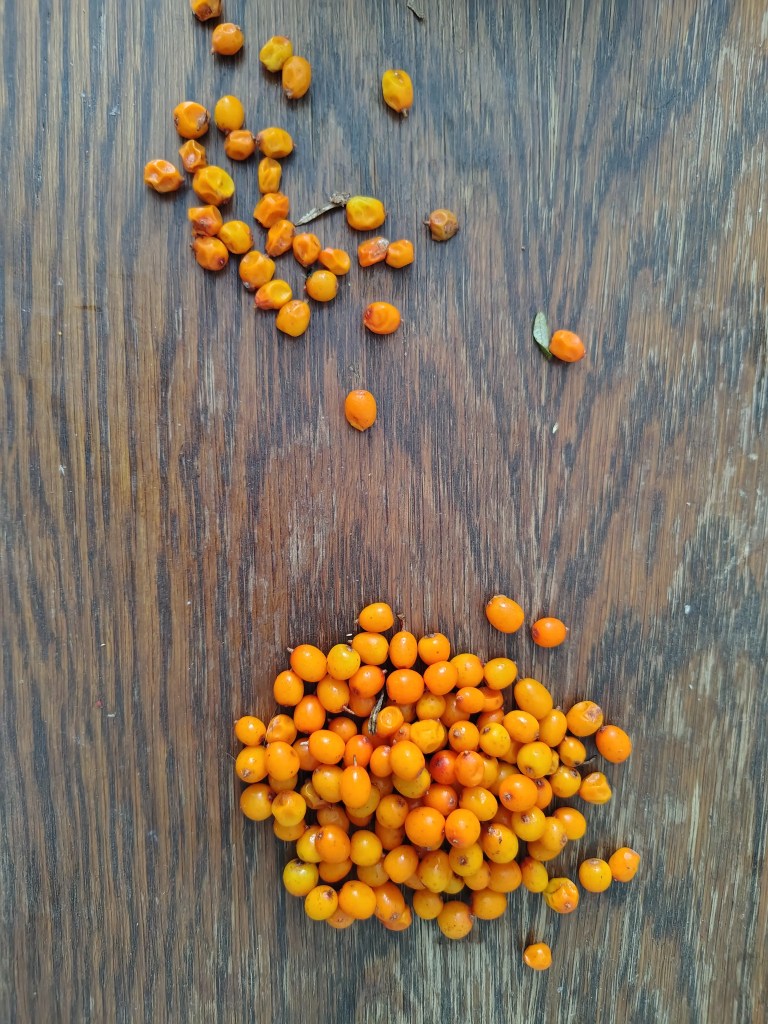
- Step 1: Sorting – Wild berries spoil fast. I sorted the firm, vibrant ones from the soft or overripe ones. I ended up discarding about 20% — totally normal for wild harvest.
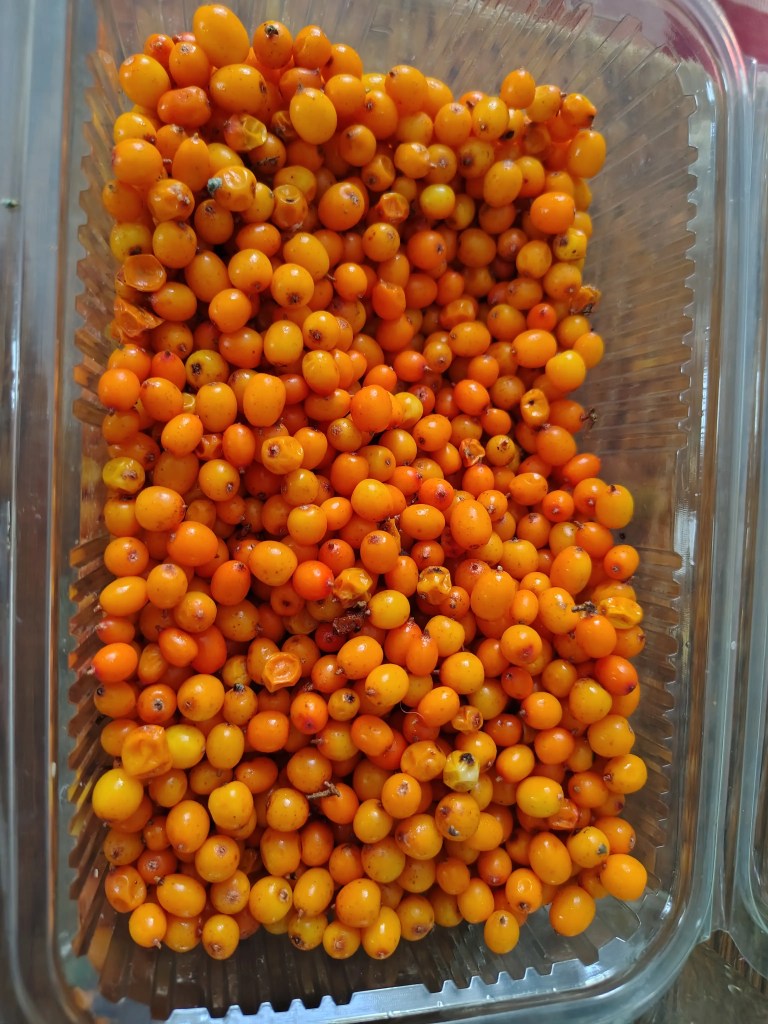
- Step 2: Rinse and dry the sea buckthorn berries very well — they must be completely dry (any water = fermentation risk).

- Step 3: Layer the berries in a clean, dry jar.

- Step 4: Pour raw honey on top until all berries are fully covered.
- Step 5: Stir gently with a wooden spoon to release any trapped air bubbles.
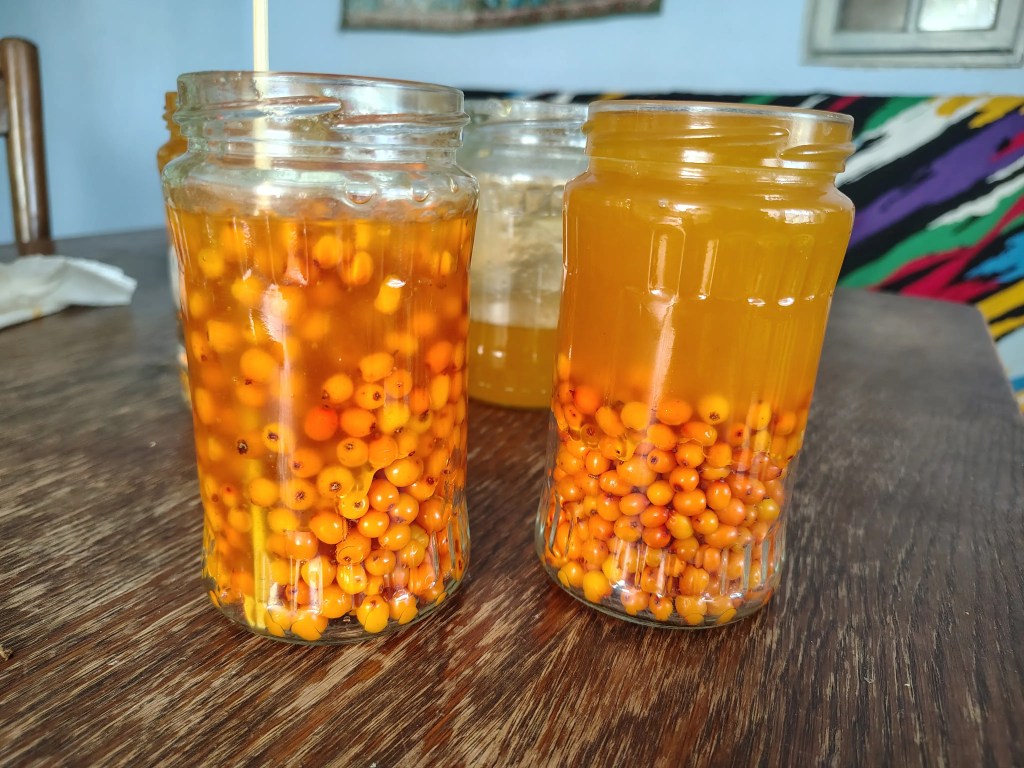
If your honey is thick or your berries are very delicate (like wild sea buckthorn), you can use a wooden skewer instead of a spoon. It lets you “poke” through the layers slowly, releasing air without crushing the fruit — patience pays off here.
- Step 6: Seal the jar and store it in a cool, dark place (or cellar).
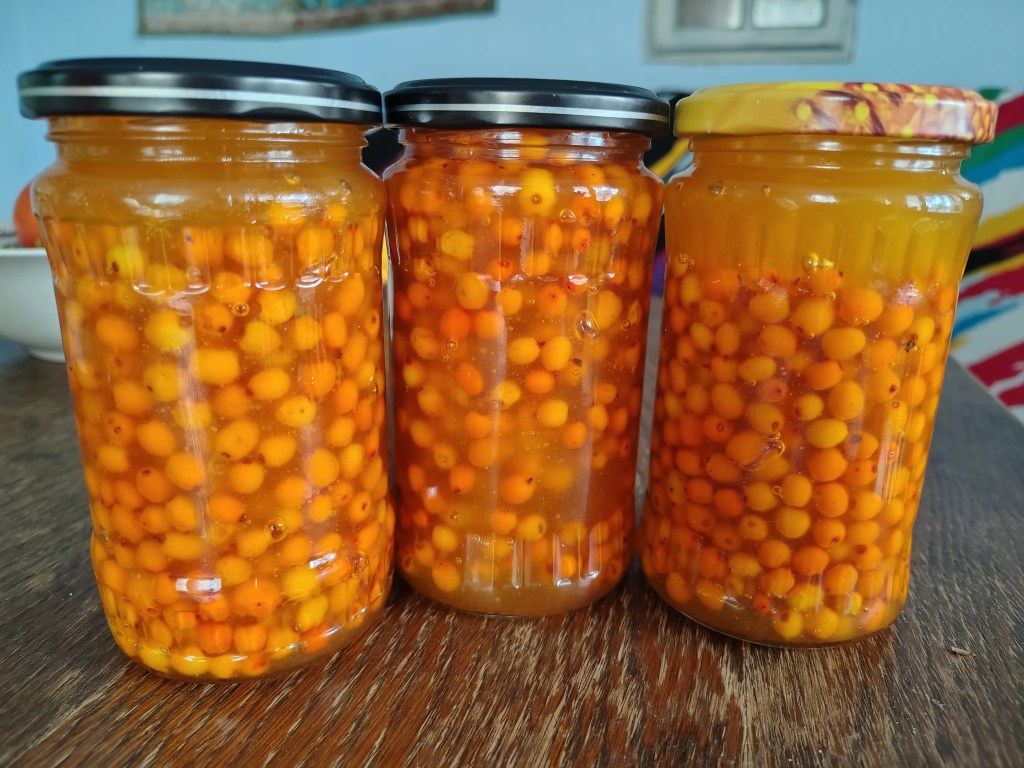
Here’s how my final batch turned out: three jars made from 500 g wild sea buckthorn and 800 g raw honey, fully covered and ready for 3–4 weeks of maceration.
- Step 7: Let it macerate for 3–4 weeks, stirring every few days or using my preferred method: flip the jar upside down one day, then flip it back the next day (don’t forget to return it upright so it doesn’t leak!). This mixes everything perfectly without opening the lid.
- Step 8: Once ready, keep in the fridge and use a clean spoon each time.
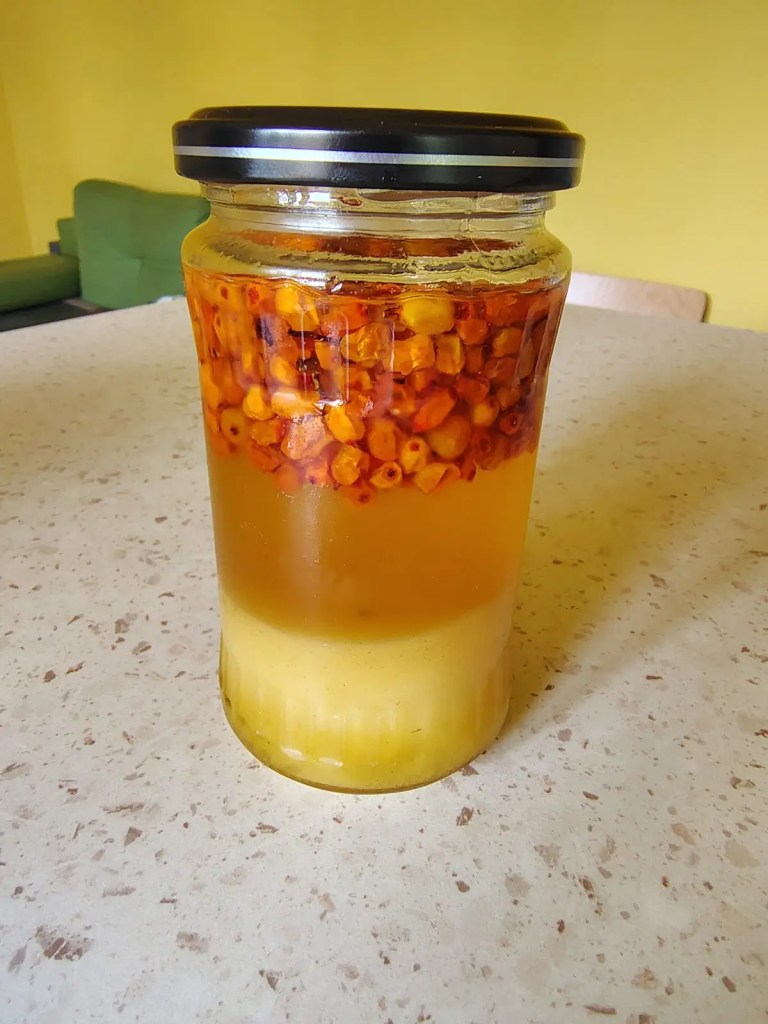
2. Partial Crushing (Coarse Blending)
You’ll need:
- 500 g frozen–thawed sea buckthorn
- ~500 g raw honey (adjust to taste)
What happens:
Breaking the cells releases vitamin C and flavonoids quickly, plus some seed oils. But oxidation increases.
You gain:
✔ More complete nutrition
✔ Faster short‑term benefits
✔ Easier to mix or serve
You lose:
❌ Shorter stability (1–2 months)
❌ Slightly bitter taste from cracked seeds
🧾 How I Made It (Step-by-Step)
I didn’t take photos for this version because I made it quickly using frozen berries, but I’ll update this section with pictures the next time I prepare a fresh batch. The steps below remain the same and are very easy to follow.
- Step 1: Thawing the Frozen Berries – for this version, I used frozen cultivated sea buckthorn. I let the berries thaw completely in a bowl, at room temperature.
- Step 2: Drying Well – even thawed berries hold moisture, so I dried them thoroughly using a clean towel or paper towels. Extra note: Frozen berries spoil much slower than wild fresh ones — so almost none were lost here.
- Step 3: Blending – I added the berries to a blender and pulsed them into a coarse paste. I didn’t turn them into a smoothie — just enough to break the berry chambers and release the vitamin C and seed oils.
- Step 4: Mixing with Honey – I transferred the paste into a bowl and poured raw honey over it. Then I mixed gently until everything looked uniform and glossy.
- Step 5: Jar Time – I spooned the mixture into clean, dry jars and sealed them tightly. The paste looks bright, thick, and almost glowing at this stage.
- Step 6: Storage & Use – this version goes straight to the fridge and stays fresh for up to 1 month. Before each use, give the jar a quick shake or stir — the paste naturally separates a bit overnight.
🧡 Optional: add a few drops of water-based propolis for extra immune support.
3. Fine Blending + Straining (Juice Version)
Fast and intense, but you lose fibers and part of the oils. Keeps 3–4 weeks, refrigerated only. 🧊
My Choice 💛
I made two of these: the coarse blended paste for a quick autumn boost and the whole‑berry macerate for winter stock. Together they cover both needs — quick energy and long‑term resilience.
What the Science Says 🔬
Reviews and small clinical trials suggest that sea buckthorn may support immunity and metabolism — especially when used with honey or propolis. A randomized adult study showed fewer respiratory infections with a sea buckthorn + honey + propolis blend (Rombio, 2021). Early pediatric research also points to better digestion and metabolic balance. Results are promising but based on small groups.
Honest conclusion: Evidence for sea buckthorn alone is still limited, but its powerful nutrients (vitamin C, carotenoids, fatty acids) and long tradition make it a worthy functional food for cold seasons. Use it consistently for 3–4 weeks, alongside rest, real food, and calm. It’s not a miracle — just nature doing its quiet work. 🌿
For Kids: Safe Dosage & Taste Tips
Sea buckthorn with honey is great for kids — but it’s potent, so keep it balanced.
Recommended amounts:
👶 2–4 yrs: ½ teaspoon daily (in yogurt, warm tea, or on toast)
🧒 5–10 yrs: 1 teaspoon daily
👩 Adults: 1–2 teaspoons daily
Start slowly and watch your child’s reaction. The taste can be bold, especially in the blended version. Mix with banana or yogurt for a smoother, kid‑friendly flavor. 🍌
The macerated honey version is sweeter and gentler — ideal for picky eaters. Remember: sea buckthorn isn’t candy, it’s a concentrated natural supplement. A little goes a long way!
Patience matters too — it’s a natural remedy, not a quick‑fix antibiotic. Benefits appear after about 3–4 weeks of consistent use.
Optional Upgrade: Propolis Power 🐝
In my kitchen, I used a water‑based propolis suspension instead of the usual alcohol tincture — safer for kids, though slightly less stable. I added a few drops to the sea buckthorn paste (the one we used in a month) but skipped it for the winter batch to keep the balance right.
Propolis — the bees’ natural antibiotic — is rich in flavonoids and has strong antibacterial and antiviral properties. 🧡
How to use it:
- For a 400 g jar, add about 1 teaspoon of water‑based extract, or just a few drops for kids.
- Avoid alcohol tinctures for children.
It enhances flavor, adds protection, and gives your jar a subtle herbal twist — without overpowering that honey‑citrus vibe. 🍊
Lela’s Tips for a Successful Jar 🏺
- Use dry, clean jars (moisture = fermentation risk)
- Cover all berries completely with honey
- Sea buckthorn paste: keep in the fridge and finish within 3–4 weeks
- Whole‑berry macerate: store in a cool cellar until opened, then refrigerate
- Stir every few days for an even, oxygen‑free blend 💫
Around the World: Sea Buckthorn + Honey Variations 🌍
- Romania – Classic Mix: Fresh or frozen berries mixed 1:1 (or 1:2) with raw honey, stored refrigerated for daily use. Simple, traditional, and widely loved — just like the one I make at home.
- Germany (Mecklenburg-Vorpommern) – Warm Juice Drink: Sea buckthorn juice + apple juice + honey + cinnamon, served hot as a cozy autumn tonic. Visit-MV Recipe
- Nordic Region – Jam/Spread: Cooked sea buckthorn with sugar or honey and spices like cinnamon or cardamom — a staple in Nordic pantries. Well With Life Recipe
- China – Herbal Tonic: Sea buckthorn berries simmered with goji berries, ginger, and honey — a warm, immune-supporting tea rich in antioxidants. This variation is inspired by traditional Chinese tonics that combine vitamin-rich and warming ingredients like ginger and goji. (No specific recipe link, as these blends vary regionally.)
- Canada – Healing Syrup or Cough Drops: Sea buckthorn juice + honey + turmeric or ginger, boiled into soothing lozenges or syrup. Omega Fruit Recipe
All recipe links are shared for inspiration — if you love their work, leave a comment and tell them Lela sent you! 🌿
Stay Connected 🌿💌
If you love seasonal living, simple remedies, and slow, natural wellness, don’t miss my monthly newsletter. It’s where I share new recipes, seasonal guides, printables, and behind‑the‑scenes notes from my homelife.
👉 Join the Newsletter — Make It Seasonal, Not Stressful
And if you want practical tools for a calmer, more organized life, explore my growing collection of printables:
Looking for more nature‑powered recipes?
Final Thoughts 🌞
Whether you like it smooth or chunky, this remedy is vibrant, traditional, and comforting. And unlike store‑bought supplements, it doesn’t require a magnifying glass to read the label.
Next time a cold knocks, or you simply crave a bit of sunshine in a jar — open it, stir gently, and remember: nature always goes first. 💛
One last note: heating or cooking sea buckthorn (as in jams or syrups) can destroy part of its vitamin C and delicate antioxidants, though it may enhance the release of seed oils and carotenoids. In short — heat changes the balance, not the magic. Choose the version that fits your purpose: raw for full vitamins, warm for comfort and flavor.
🍯 Boost your immunity, not your stress levels.
#SimplifyWithLela 🍯
 MakeItSimpl3