
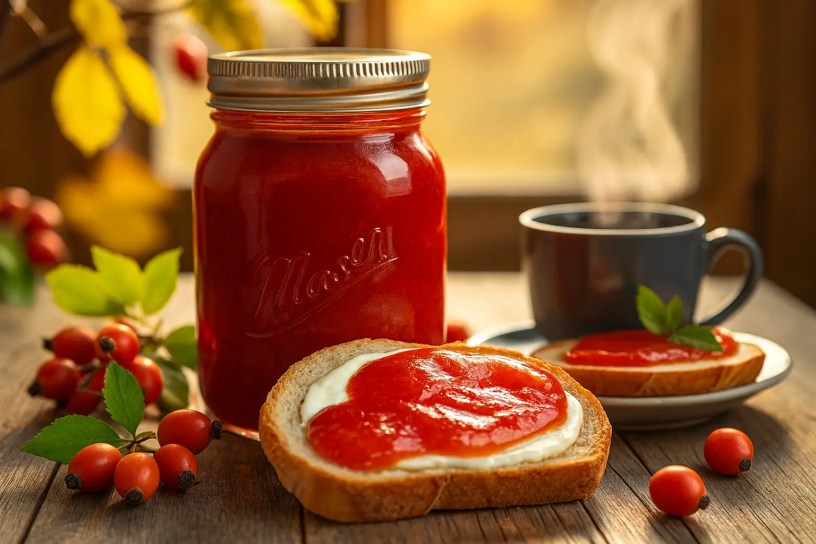
Traditional Rosehip Jam – Easy Homemade Romanian Recipe
Discover how to make silky, vibrant rosehip jam using classic Romanian methods. A sweet, nostalgic preserve perfect for autumn mornings.
Rosehip jam (gem de măceșe) is more than a nostalgic rosehip jam recipe from childhood — a traditional preserve — it’s a warm hug from childhood, a jar of edible nostalgia, and a flavour that instantly takes you back to simpler times. 🍁
It’s also a core childhood memory for almost every Romanian over 30.
Its unmistakable aroma, silky texture and deep floral sweetness made it a staple in the ’90s — a time when even a single jar of rosehip jam could transform the simplest meal into a small celebration.
Nothing compares to 🥞 crêpes filled with gem de măceșe, warm and fragrant, or to a slice of buttered toast with rosehip jam and mint or linden tea on cold mornings. These combinations were the unofficial national breakfast of the decade.
What Is Rosehip Jam? 🌹
Rosehip jam starts from the classic rosehip paste but is transformed into a true preserve by adding sugar, lemon and water, then gently simmering the mixture just until it binds and reaches a jammy consistency.
The result is a smooth, amber-red jam with a velvety texture, a floral‑tangy flavour and a sweetness that balances the natural sharpness of rosehips.
Although once a staple in most Romanian households, rosehip jam has become less common today. The traditional method is time‑consuming, meticulous and requires real patience — cleaning the fruits, simmering them, and passing them through a sieve multiple times.
Anyone who has ever made it knows you must mentally prepare yourself for the task.
While modern appliances can help with turning rosehips into paste, few people still take on the full process of making the jam from scratch. These days, many opt to buy ready-made rosehip purée — unsweetened and undiluted, though quite pricey — and then cook it at home, sweetening and thickening it to their own taste.
Because of the effort involved — similar to the laborious green walnut preserve — store‑bought rosehip jam is now considered a delicacy, often priced higher and found mostly in specialty shops.
Traditionally prepared in early autumn, rosehip jam remains a comforting seasonal dessert that pairs beautifully with breads, pastries and festive dishes.
Nutritional Profile of Rosehip Jam 🍯
Rosehips are naturally rich in vitamins, minerals and antioxidants — but once they are turned into jam, the nutritional profile changes. Jam is a cooked dessert preserve, not a raw superfood, so heat‑sensitive nutrients (like vitamin C) decrease significantly during preparation.
Rosehip jam’s value is mostly culinary and emotional, with gentle nutritional benefits that survive the cooking process.
These compounds make rosehip jam one of the most concentrated natural sources of antioxidants traditionally used across Europe.
Health Benefits of Rosehip Jam ✨
Rosehip jam is a comforting dessert preserve, not a raw superfood — but because several heat‑stable compounds survive cooking, it still offers gentle, natural benefits.
1. Gentle Antioxidant Support
While vitamin C decreases significantly during cooking, heat‑stable antioxidants — especially carotenoids and polyphenols — remain. These compounds help protect cells from everyday oxidative stress.
2. Skin‑Friendly Nutrients
Rosehip jam retains beta‑carotene and vitamin E, both known for supporting skin elasticity, glow and overall complexion.
3. Digestive Comfort
Thanks to its natural pectin and fibre, rosehip jam supports smooth digestion and can help maintain gut regularity.
4. Emotional & Nostalgic Well‑Being
This may not be scientific — but it is deeply true: foods tied to childhood memories bring comfort, grounding and emotional warmth. Rosehip jam is one of those flavours.
5. Gentle Energy
Jam contains natural sugars that provide mild, pleasant energy — perfect for pairing with crêpes or toast on slow mornings.
Key Nutrients Found in Rosehip Jam
- Vitamin A (beta‑carotene) – heat‑stable and supporting vision and skin health.
- Vitamin E – a heat‑resistant antioxidant that helps protect cells.
- Minerals – magnesium, calcium, potassium and phosphorus remain largely intact.
- Carotenoids & polyphenols – antioxidants that tolerate heat better than vitamin C.
- Natural pectin & fibre – supporting digestion and giving jam its velvety consistency.
How to Make Rosehip Jam (Traditional Method) 🫙
We live in a hilly, semi‑wooded area, and wild rose bushes grow everywhere in the back garden. One of our neighbours also has an uncultivated plot right next to us, so rosehips grow freely there too — and he kindly lets me forage whenever I need.
So off I went rosehip picking.
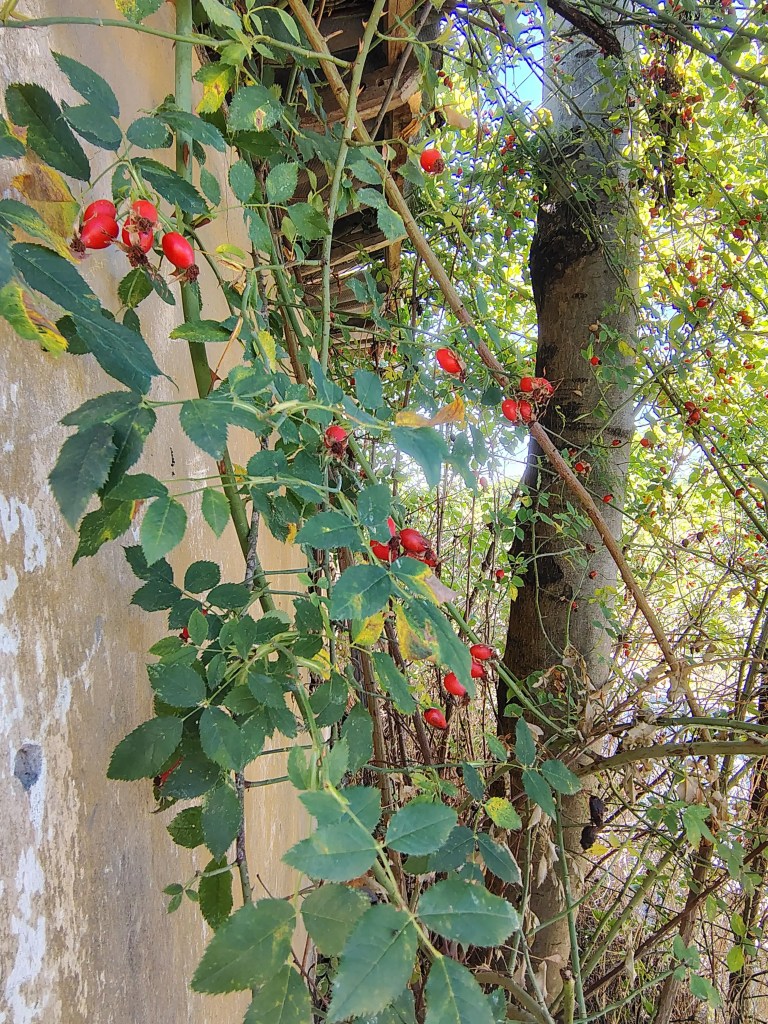

Where we live, rosehips ripen quite late — after blackberries, after sea buckthorn — usually starting mid‑September and lasting until the end of October.
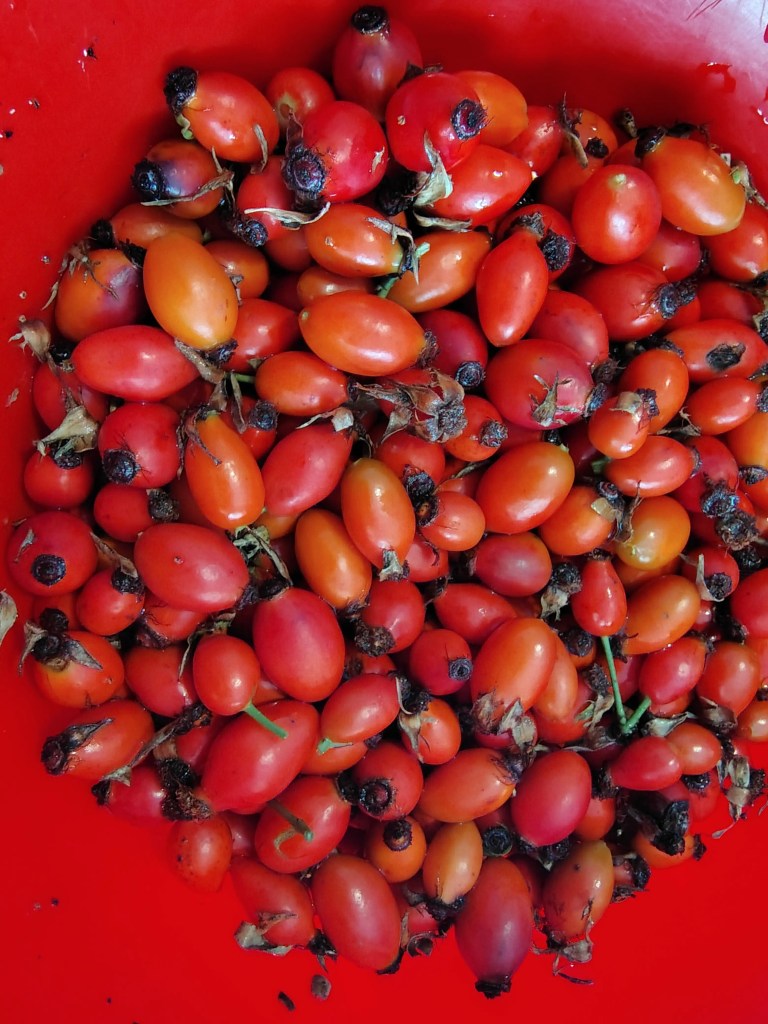
I started early in the season, just in case I wanted to make a second batch. They were still small, so I picked only about 1.2 kg.
They looked like more in the bowl, but that’s always the story with rosehips.
When Are Rosehips Ripe? 🌿
Rosehips usually ripen from mid‑September to late October, depending on the region. Look for deep red or orange fruits that feel firm. Avoid soft or wrinkled rosehips — they’re overripe and lose flavour.
If foraging, wear gloves: wild rose bushes have sharp thorns, and branches tend to grow dense. Choose bushes away from roads for cleaner fruit.
The jam is both simple and demanding — simple in ingredients, demanding in patience.
The longest and most labor‑intensive part is passing the rosehips through a sieve to remove seeds, fine hairs and the tough skins. Traditionally, this step is done by hand and can take hours, which is why many people no longer attempt it.
Modern kitchen appliances can help with the sieving step, but if you’re doing it the classic way, prepare a long podcast, roll up your sleeves and accept that this will count as your arm workout for the week.
Ingredients
- 1.2 kg fresh rosehips (fully ripe, deep red or orange)
- 500 g sugar
- 1 lemon
How To
Prepare the rosehips
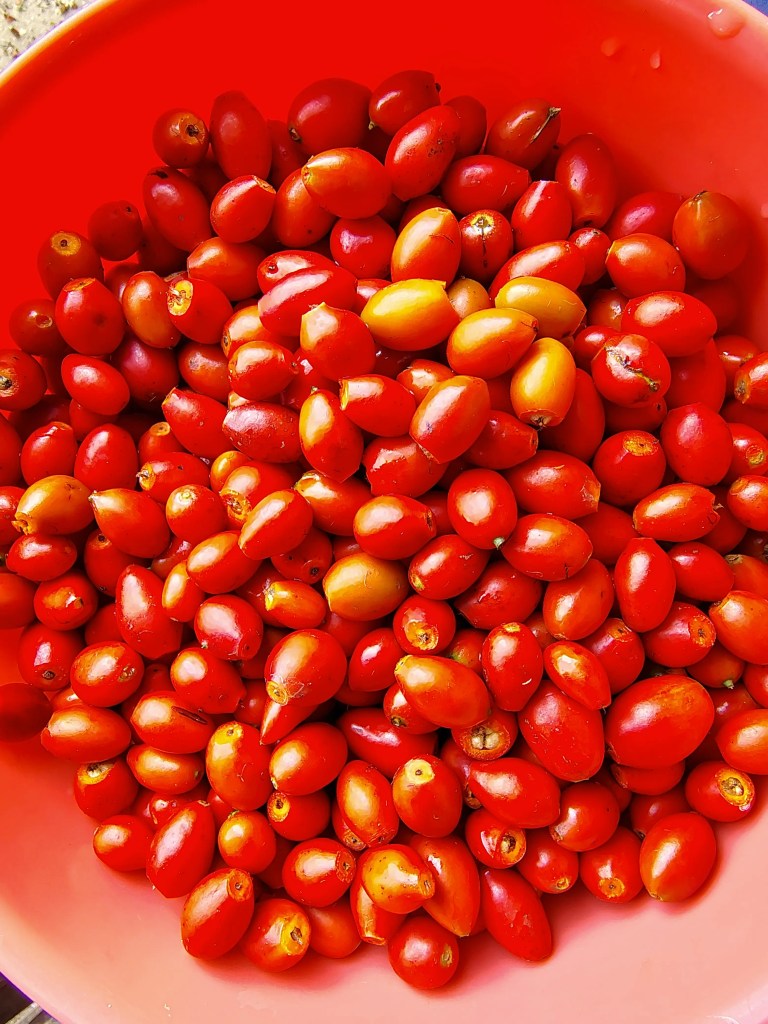
I cleaned the rosehips — removed the stems and blossom ends, washed them well and sorted them. I kept only the firm ones; if they were soft or squishy, they were overripe and no longer good.
Soften the rosehips
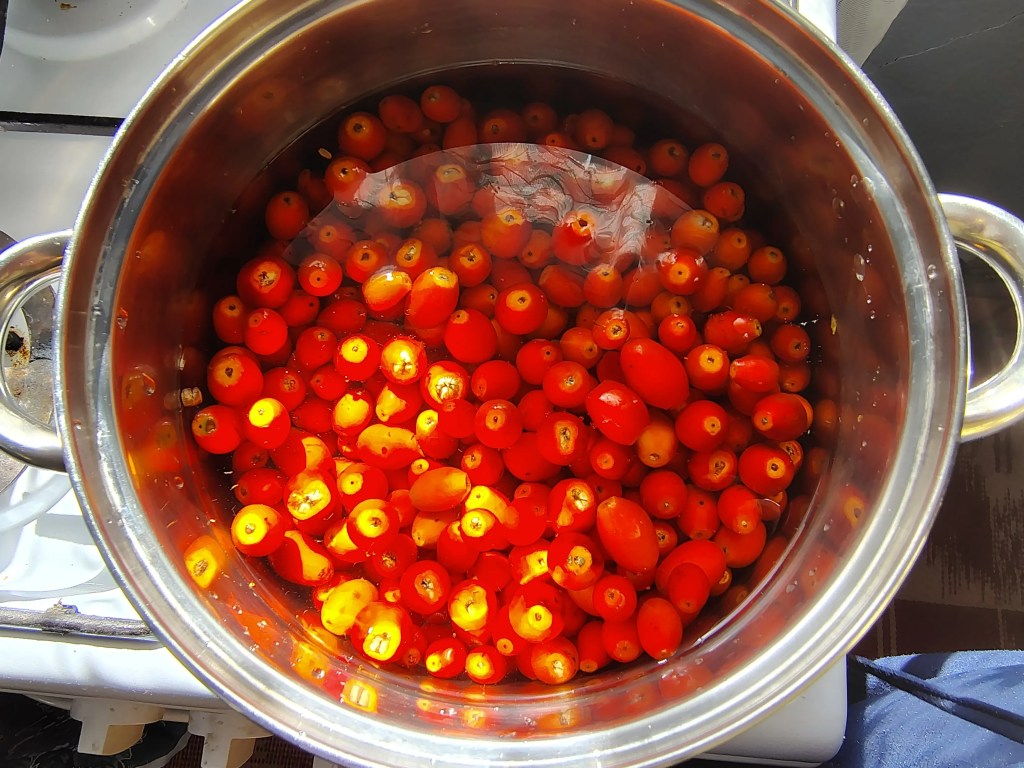
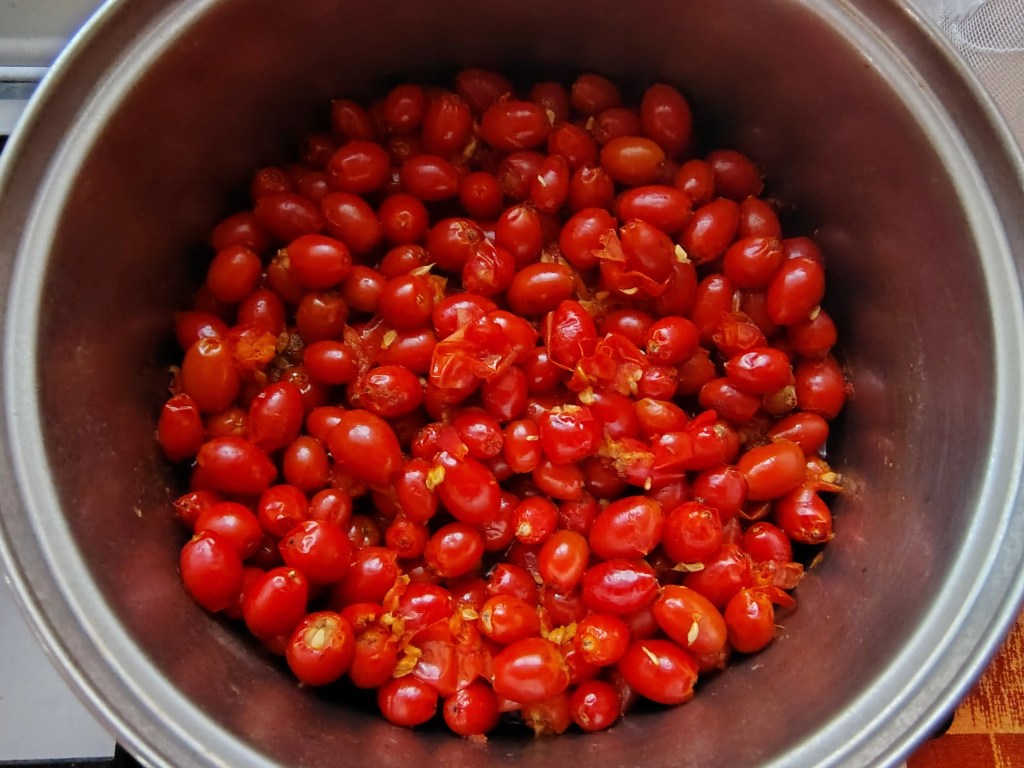
Then, I placed the rosehips in a pot, covered them with water and cooked them on low heat until completely soft — for me this took about 35–40 minutes.
Let them cool slightly before sieving.
Blending & Sieving
This is the longest step. Traditionally you pass the mixture through a sieve 2–3 times for a silky texture.
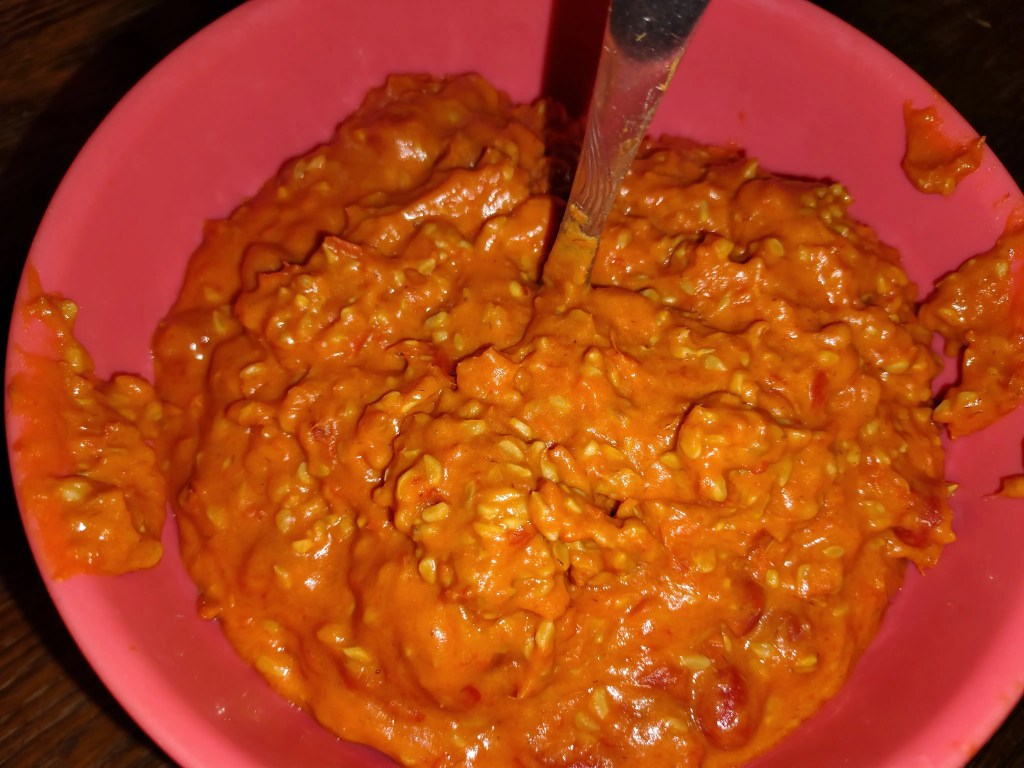
- I blended the rosehips together with the cooking liquid — I didn’t discard that water — because blending everything together loosens the mixture. Rosehips become very thick and sticky on their own, so keeping and using the cooking liquid makes the paste much easier to work with. Also, blend them in batches to avoid overheating the blender.
- I ended up with roughly 950 g of blended pulp.
- Then I added about 300 ml of water to make sieving easier.
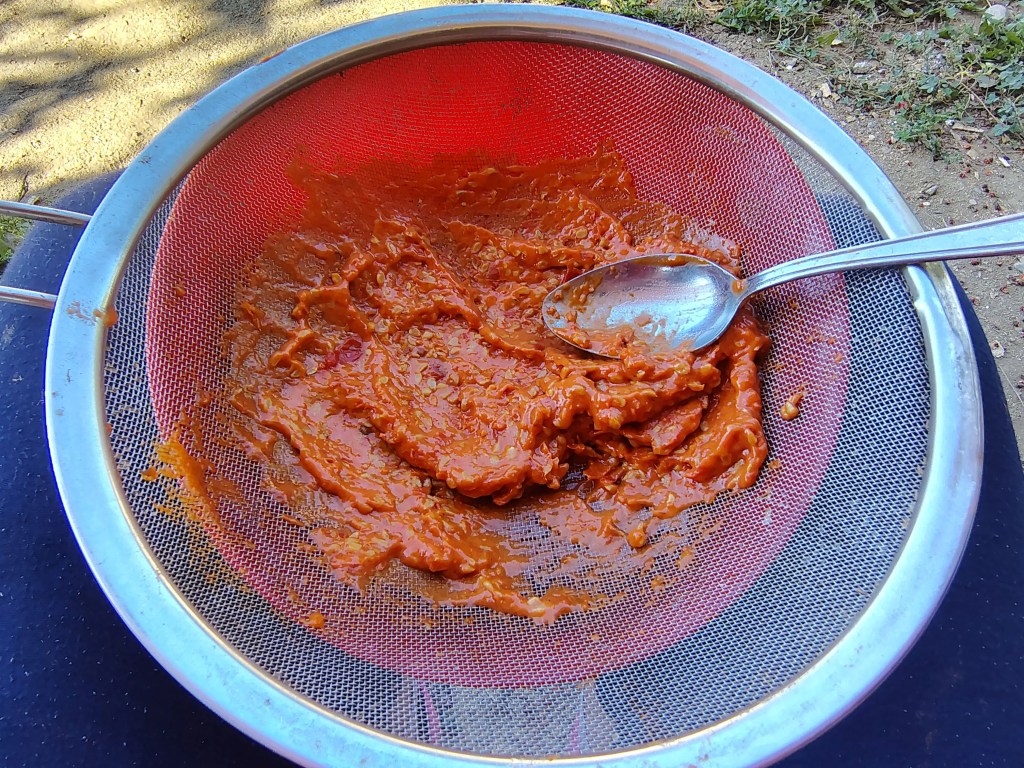
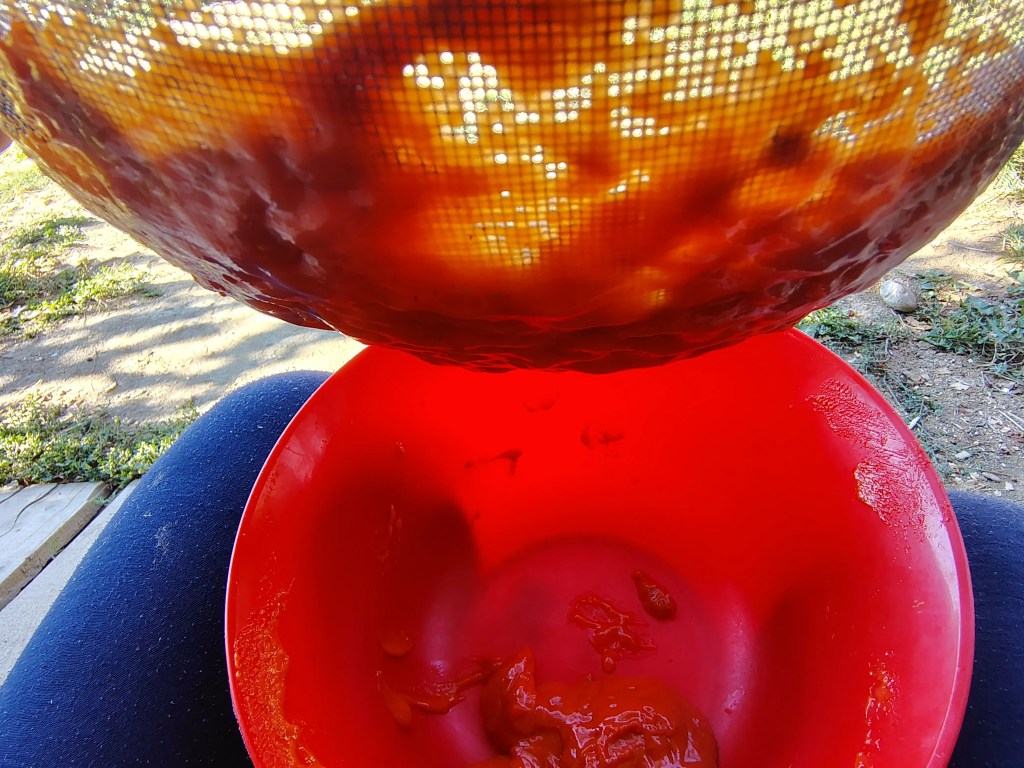
- I worked in small portions, placing 1–2 spoonfuls of pulp into a large sieve and pressing with a spoon to extract the smooth paste.
- This took around 3 hours — yes, really.
- To avoid wasting anything, I diluted the remaining solids with another 300 ml of water and strained them through cheesecloth.
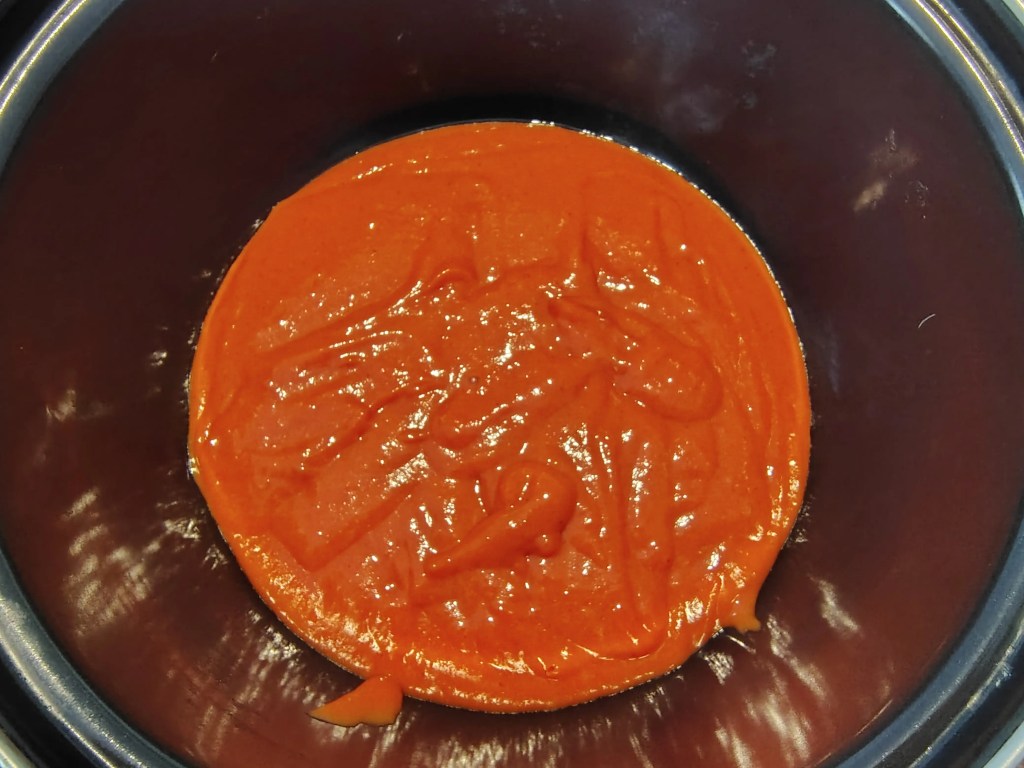
- In the end, I had 1 kg of rosehip paste — thick, sticky, and so dense that a spoon could stand upright in it.
Dilute & sweeten
Now I could finally start making the actual jam.
Rosehip paste needs to be thinned considerably before cooking, otherwise the jam becomes too stiff. You’re aiming for a texture similar to thick sour cream.
- I added water gradually, about 200 ml at a time, stirring and checking the consistency.
- In total, I added around 750 ml of water.
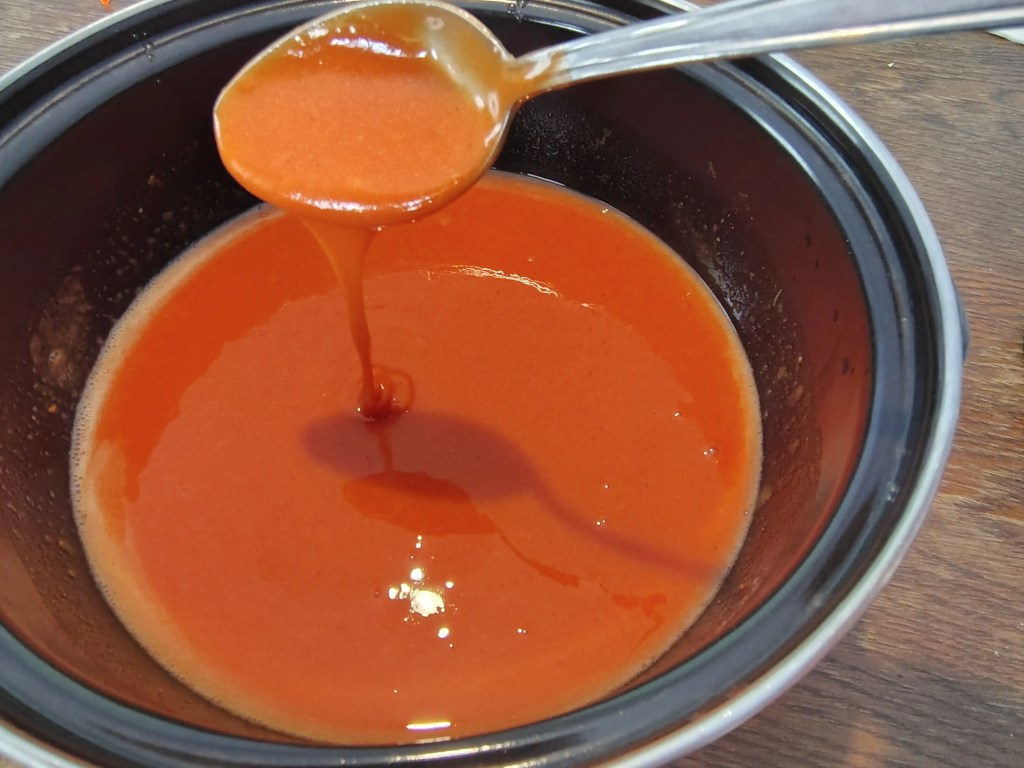
Sweetness is personal, but Romanian jam guidelines generally use less sugar than classic preserves. For 1.75 kg of diluted paste, I added 500 g of sugar, but you can adjust to taste. A common ratio is 300–400 g sugar per 1 kg of fruit.
I added the sugar and the juice of one lemon (this helps keep the colour bright), then moved on to cooking.
Rosehip jam doesn’t need a long boil — the fruit is already cooked. You only need to dissolve the sugar, homogenise the mixture and sterilise the jam.
- Use a wide pot for faster evaporation.
- Bring the mixture to a simmer (it takes a bit — about 30 minutes).
- Let it boil gently for 10–15 minutes.
Meanwhile, I sterilised my jars.
I pour the hot jam into warm, sterilised jars placed on a metal tray (to prevent thermal shock) and seal with lids.
My grandmother taught me to turn jars upside down overnight. It’s an old habit, but it ensures a good seal, especially when reusing jars and lids.
Let them cool completely, then store in the pantry. Once opened, keep the jar in the fridge.
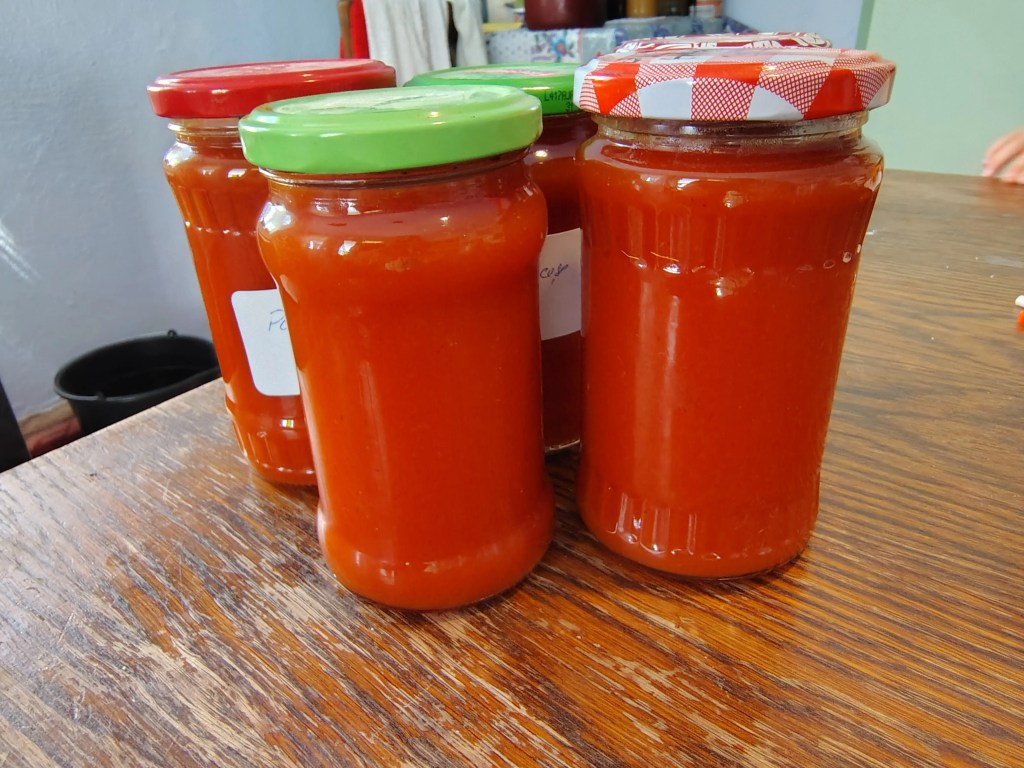
The result is a smooth, velvety jam 😍 perfect for autumn and winter recipes.
How to Use Rosehip Jam 🍞
Rosehip jam’s versatility makes it a pantry favourite year‑round.
It’s incredibly versatile and brings a nostalgic flavour to both simple breakfasts and festive desserts.
- Breakfast classics: Spread on warm toast, swirl into porridge or yoghurt, or pair with fresh butter on crusty bread.
- Crêpes & pancakes: The iconic Romanian pairing — thin crêpes generously filled with rosehip jam, or fluffy pancakes topped with a warm spoonful.
- Desserts: Use as a filling for sponge cakes, linzer cookies, tarts, pastries or shortbread bars.
- Cheese boards: Its floral acidity pairs beautifully with mild cheeses.
- Quick snack: A simple slice of bread with butter and rosehip jam — the ’90s classic.
Its sweet-tart flavour makes it perfect 🍰 for both everyday meals and festive dishes.
Storage & Shelf Life 🫙
Properly sealed rosehip jam keeps up to 12 months in a cool pantry. Once opened, store the jar in the fridge and consume within 2–3 weeks. Always use a clean spoon to avoid contamination.
Final Thoughts 🍂
Rosehip jam isn’t just a preserve — it’s a season, a memory and a tradition all in one jar. It carries the warmth of October kitchens, the sound of jars sealing on the counter, and the comfort of flavours that defined childhood.
It’s the jam that made Sunday crêpes special, that turned simple toast into a small celebration, and that connected generations through a ritual of patience, foraging and care.
Whether you enjoy it on cold autumn mornings, serve it with festive desserts or keep a jar in the pantry “just in case,” rosehip jam remains one of Romania’s most nostalgic and heartfelt gifts of the season — sweet, silky and made with love.
Explore More with Lela 🌿
If you enjoyed this recipe and want to stay connected with slow, seasonal living, here are a few helpful links from around the blog:
- ✨ Life Kits Library — Explore all my downloadable printables and seasonal kits designed to make life simpler and more intentional.
- 💌 Join the Monthly Newsletter — A cozy inbox moment every month: seasonal tips, new recipes, printables, and behind‑the‑scenes stories.
- 🫙 Preservation Guides — From jar sterilising to traditional canning methods, find step‑by‑step guides to help you preserve confidently.
🍯 Sweet, seasonal, a little nostalgic — just like me. #SimplifyWithLela 🍯
 MakeItSimpl3